
After upholstery cleaning, provide gentle air movement, keep people and pets off the furniture until the technician says it is ready, and follow the material-specific care instructions. Drying is different for every sofa, sectional and chair because fabric, cushion construction, moisture, humidity and ventilation all matter.
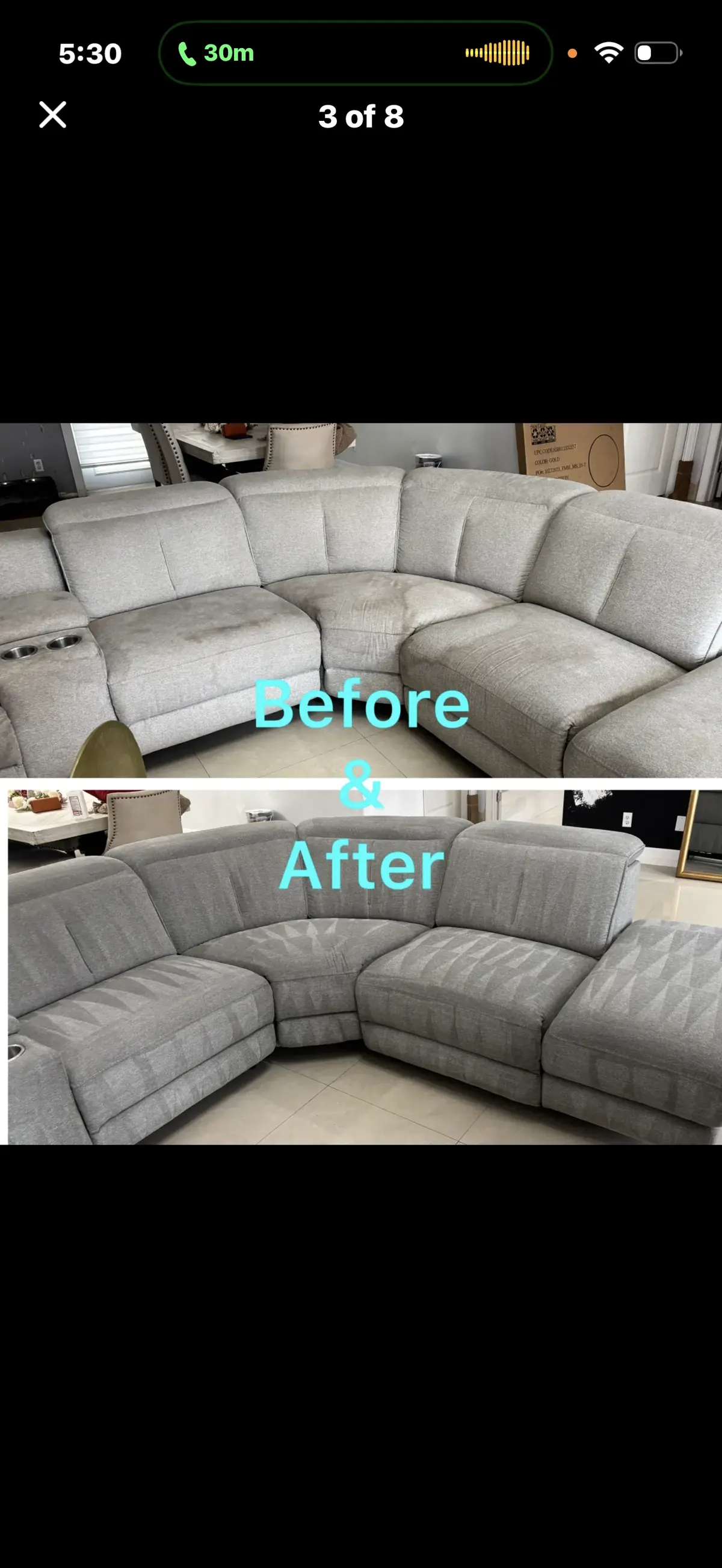
What happens during professional upholstery cleaning
A careful service is not a single spray-and-extract routine. The technician reviews the fiber, fabric construction, care information, color stability, existing wear, cushion filling, prior products, contamination and access before selecting a method.
When the material allows it, controlled hot-water extraction may be performed with an upholstery tool. Pre-treatment and agitation can help suspend compatible soil, while prompt recovery removes suspended soil and excess rinse solution. Not every fabric is suitable for the same wet-cleaning method.
What to do immediately after cleaning
Keep people and pets off the furniture until the fabric and cushions are adequately dry. Early use can compress damp fibers, disturb grooming and transfer soil back onto a freshly cleaned surface.
Improve gentle air movement by opening doors or windows when practical and using normal room ventilation. A fan can help move air through the room, but it should not distort a delicate fabric or blow aggressively across loose upholstery components.
Leave cushions positioned as instructed. Do not automatically remove every cushion cover or place cushions in direct sunlight. Some furniture materials can shrink, distort or develop uneven color when handled incorrectly.
What not to apply while the furniture is drying
Do not cover damp upholstery with plastic, storage bags or tightly fitted furniture covers. Covering the fabric can slow evaporation and trap moisture. Wait until the furniture is dry before replacing decorative throws or protective covers.
Do not add perfume sprays, disinfectants, fabric softeners or household spotters immediately after professional cleaning unless the technician recommends them. Extra products can leave residue, change the appearance or interfere with a later treatment. Never mix household chemicals, especially bleach, ammonia, acids or strong solvents.
Why upholstery can look different while drying
Freshly cleaned upholstery can temporarily show changes in texture, shading or appearance. Some pile fabrics need grooming so their fibers lie in a more uniform direction. A sectional can also look uneven when cushions are returned to different positions.
Existing sun fading, worn nap, crushed fibers, unstable dyes, damaged backing, watermarking and set stains may remain after cleaning. Inspection and expectation-setting are important before treatment so the customer understands what cleaning can and cannot change.
What if the furniture still smells after cleaning
A remaining odor does not automatically mean the cleaning failed. Odor may be associated with surface soil, cushion fill, backing, pet contamination, moisture history or previous products.
If a pet accident has reached cushion interiors or other absorbent layers, surface treatment may not address the entire contamination path. Do not add more chemicals if the odor becomes stronger while the furniture dries. Contact the cleaner and describe the location, timing and product history.
When to request another inspection
Ask for another review if furniture remains unusually damp, develops a musty smell, shows a new color change, has a returning stain, feels stiff or crunchy, or appears distorted after drying. A delicate, unidentified or specialty fabric also deserves a material-specific review.
Upholstery affected by contaminated water or suspected mold may require a restoration or remediation specialist rather than ordinary upholstery cleaning. Safety and the source of the moisture should be addressed first.
Frequently asked questions
How long does upholstery take to dry?
There is no responsible single answer for every piece. Drying depends on fabric, cushion construction, cleaning method, moisture recovery, temperature, humidity and air movement. The technician should provide guidance based on the furniture inspected.
Can I sit on the sofa the same day?
Only when the technician confirms that the upholstery is ready for normal use. Sitting too early can disturb grooming, transfer soil and compress damp fibers unevenly.
Should I put a fan directly on the couch?
Gentle air movement may help, but do not use a setup that distorts the fabric or blows aggressively across delicate upholstery. Follow the technician's instructions for ventilation and fan placement.
Should I remove the cushion covers to dry them separately?
Not automatically. Some upholstery covers are not designed to be removed and washed. Removing or washing them incorrectly can cause shrinkage, distortion or damage. Ask before unzipping or laundering any cover.
Can professional cleaning remove every stain?
No. Cleaning can improve many spots, but results depend on the fiber, dye, age of the stain, previous treatments, heat exposure and whether the material has already been permanently changed.
Can professional cleaning remove every pet odor?
No. Surface treatment may improve many odor situations, but contamination can extend into cushion fill, backing or other absorbent layers. Severe or repeated contamination may require a different treatment plan or replacement of damaged material.
Technical references
Ready to discuss the furniture?
Send photos and details so Steamly Pro can review the material, condition and access before recommending a plan.